

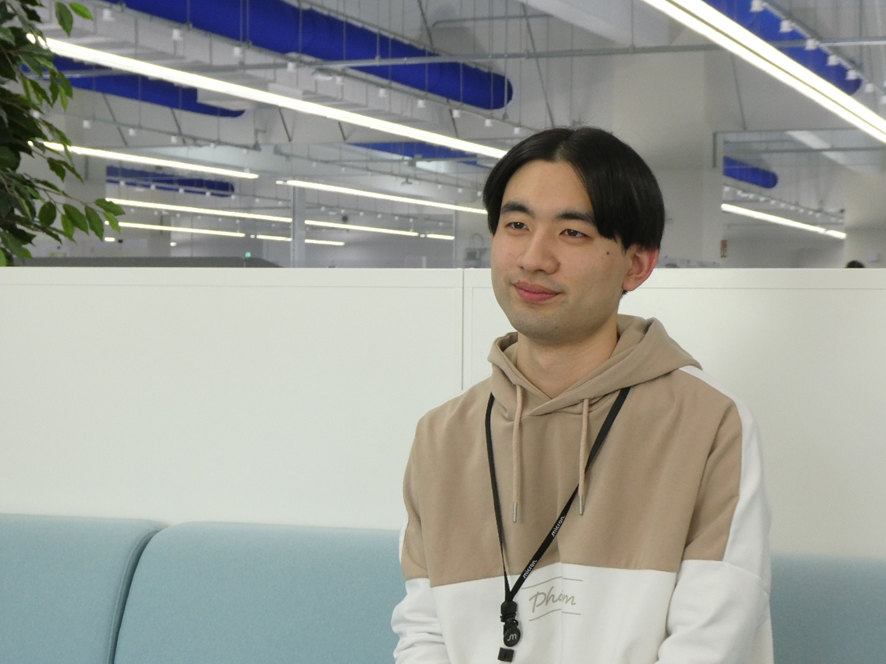
Kotaro Ozaki, a second year Master course student at Graduate School of Nagoya University, Department of Electronic Engineering, participated in the first UPWARDS internship at Micron’s Hiroshima on 15-24 December 2025.
On the final day, we had the opportunity to hear his thoughts on this internship, his interest in semiconductors, and his future aspirations.
Q1. Why did you become interested in semiconductors?
— When I was in elementary school, I loved doing electronic projects. I think that was the starting point.
Q2. Why did you become interested in Micron? And how was your experience on-site?
—My first connection with Micron was in 2024, when I participated in the UPWARDS summer program and stayed at the Rochester Institute of Technology. Living together with American people for about two weeks allowed me to directly experience ways of thinking and values completely different from those of Japanese people, which was incredibly stimulating. During the program, we visited the GlobalFoundries facility in Albany and toured their cleanroom. While the cleanroom processes were largely similar to what we conduct at the university, I was amazed by the far greater scale of the equipment and how development was carried out on an almost fully automated line. Seeing the workplace of a semiconductor company firsthand helped me understand how my daily research connects to society.
At RIT, we particularly worked on solar cell fabrication. Although the practical work itself was not very different from what I usually do at university, learning alongside Japanese students from diverse backgrounds allowed me to gain new perspectives. I felt that it would be wonderful if we could combine the strengths of each other. We also had the chance to visit places like Niagara Falls and Destiny USA, and I was struck by the sheer scale of everything.
Later, in July–August 2025, I participated as a teaching assistant in the UPWARDS summer program for U.S. university students, hosted by Nagoya University. As part of the program, we had the opportunity to visit a Micron plant, where I toured the facility with American students and listened to engineers speak about their work. This left me with a very positive impression of the company’s atmosphere. Seeing things firsthand taught me many things that I could not have known otherwise, and it was a truly refreshing experience.
Q3. Your research focuses on dry etching. How did the wafer processing results compare to your expected etching conditions?
— I’m not sure if it was completely correct, but I was happy that the results didn’t deviate much from the conditions I had anticipated.
Q4. How was it to experience the manufacturing process during this internship?
— It was very different from attending lectures or reading materials and thinking theoretically. I believe it was an extremely valuable experience.

Q5. What do you find fascinating about semiconductors?
— You can’t see them, and it’s hard to verify what’s really happening, yet they power so many things in the world. Nowadays, semiconductors are in almost everything, functioning in every aspect of daily life. I find it exciting that I can be involved in something so impactful.
Q6. What do you think is the benefit of participating in internships as a student?
— I graduated from a technical college, so I happened to study semiconductors as a required subject. That foundation was very useful during this internship. It’s a bit different from a typical high school experience, but understanding how what you’ve learned applies in practice is a valuable experience.
Q7. Your research specialty is dry etching. Why did you choose this field?
— I’ve been researching logic devices, and I’m aware that cutting-edge transistor sizes keep shrinking. Wet processes have limitations for making smaller structures, so I believe dry etching has great potential, which is why I focus on it.
Q8. What message would you give to children who are still unsure about pursuing science and engineering?
— Thinking with your own mind and then making it real with your hands is something you can only do in science and engineering. If you enjoy that, I strongly recommend pursuing a STEM path.
Q9. What are your future dreams or things you’d like to do?
— I want to travel to various places around the world and gain more knowledge and experience. Maybe it’s just because I’m full of curiosity.
Q10. Any words for the Micron members who worked with you during this internship?
— I believe people accepted me during a very busy time, so I’m truly grateful for welcoming me under such circumstances.

マイクロンジャパン、UPWARDSインターンシップを設立。所属学生に広島で初めてインターンシップを開催
名古屋大学大学院工学研究科電子工学科専攻機能集積デバイス研究室で博士課程前期の尾崎孝太郎さんが、2025年12月15~24日にマイクロン広島工場で設立されたUPWARDSインターンシップに初のインターン生として参加しました。
最終日に今回のインターンシップについての感想やご自身の半導体への興味、将来の夢などについて聞く機会がありました。
Q1 何故半導体に興味を持たれたのでしょうか?
―小学生の頃に、電子工作が好きでよくやっていました。それがきっかけになっていると思います。
Q2 マイクロンに興味を持たれたのは何故ですか?また実際に現場を体験してみていかがでしたか?
―マイクロンとの最初の接点は、2024年にUPWARDSのサマープログラムでロチェスター工科大学に滞在したことです。アメリカの方と2週間ほど一緒に生活することで、日本人と全く異なる考え方や価値観を肌で味わい、とても刺激的でした。プログラム期間中にGlobalFoundries@Albanyの工場を訪問し、クリーンルームを見学しました。クリーンルームのプロセス自体は大学で実施しているものと概ね同じでしたが、大学の設備よりはるかに大規模で、実質自動化されたラインで開発が行われていたことに驚きました。半導体企業の現場を見ることで、日頃の研究がどのように社会と繋がっているかを学ぶことができました。
RITでは特にSolar Cell作製の実習を行い、普段大学で行うこととあまり変わりはありませんでしたが、様々なバックグラウンドを持つ日本人学生と一緒に学ぶことで色々な視野で学ぶことできました。
お互いの良いところを組み合わせることができれば良いなと思いました。
また、ナイアガラの滝やDestiny USAなどに行く機会もあり、どれもスケールが大きく驚きました。
その後、2025年7-8月に名古屋大学主催の米大学生向けUPWARDSサマープログラムにteaching assistant として参加をしました。プログラムの一環として、マイクロン工場を訪問する機会があり、アメリカ人の学生と一緒に工場見学をしたり、エンジニアの方から話を聞いた際に、会社の雰囲気について良い印象を持ちました。
百聞は一見にしかずで、現場をみなければわからなかったことが沢山あり、とても新鮮な経験ができました。
Q3 専門の研究対象はドライエッチングとのことですが、実際に想定したエッチング条
件に対してウエハを処理してみて、結果はいかがでしたか?
―それが正しいかどうかはわかりませんが、想定していた条件からさほど大きくずれることのない結果が出て嬉しかったです。
Q4 今回のインターンシップで製造プロセスを体験してみていかがでしたか?
―学校で講義を受けたり、何かを読んだり、机上の論理で考えるのとは大きく異なり、とても良い経験になったと思っています。
Q5 半導体のおもしろさについて教えてください
―ものは見えないですし、実際にどうなっているのかを確かめることも難しいのに、それが世の中のさまざまなものに役立っていて、動かしているという点です。今はもうほぼ全てのものに様々な半導体が入っていて、生活のあらゆるシーンでそれが機能しています。そしてそこに自分が関与できるということにもおもしろさを感じます。
Q6 学生時代にインターンシップに参加することにはどのような効果があると思いますか?
―自分は高専出身なので、たまたま、半導体が必須科目の学校で学んだことというのがインターンシップでとても生きる、専門教育の基礎が生かされる場面が多かったと思います。普通の高校生活とは少し違いますが、学んだことが実際にはこうなるということが分かり、貴重な体験でした。
Q7尾崎さんのご専門の研究はドライエッチングと聞いています。何故ここにご興味を持たれたのかぜひおうかがいしたいです。
―自分はロジックデバイスをずっと専門で研究しており、最先端のトランジスタのサイズがどんどん小さくなっていっていることを認識しています。
その中で、ウェットはより小さいものを作るのには限界があるため、ドライエッチングにポテンシャルがあると考えその研究に注力しています。
Q8 まだこれから理系に進もうか悩んでいる子供達への尾崎さんからのメッセージをお願いします。
―自分の頭で考え、それを手を動かしてみて実現する ということは理系でないとできないことです。なので、そういうことが好きならば、ぜひ理系に進まれることをお勧めします。
Q9今後の夢ややってみたいことについても教えてください。
―これからは、世界の様々な場所に行ってみて、もっと知見や経験を増やしていきたいと思っています。単純に好奇心の塊だからでしょうか。
Q10今回インターンシップに一緒に取り組んでくれたマイクロンのメンバーに一言お願いします。
―とても多忙な時期に受け入れてもらったと思っていますので、そんな時に受け入れていただき本当に感謝しています。