

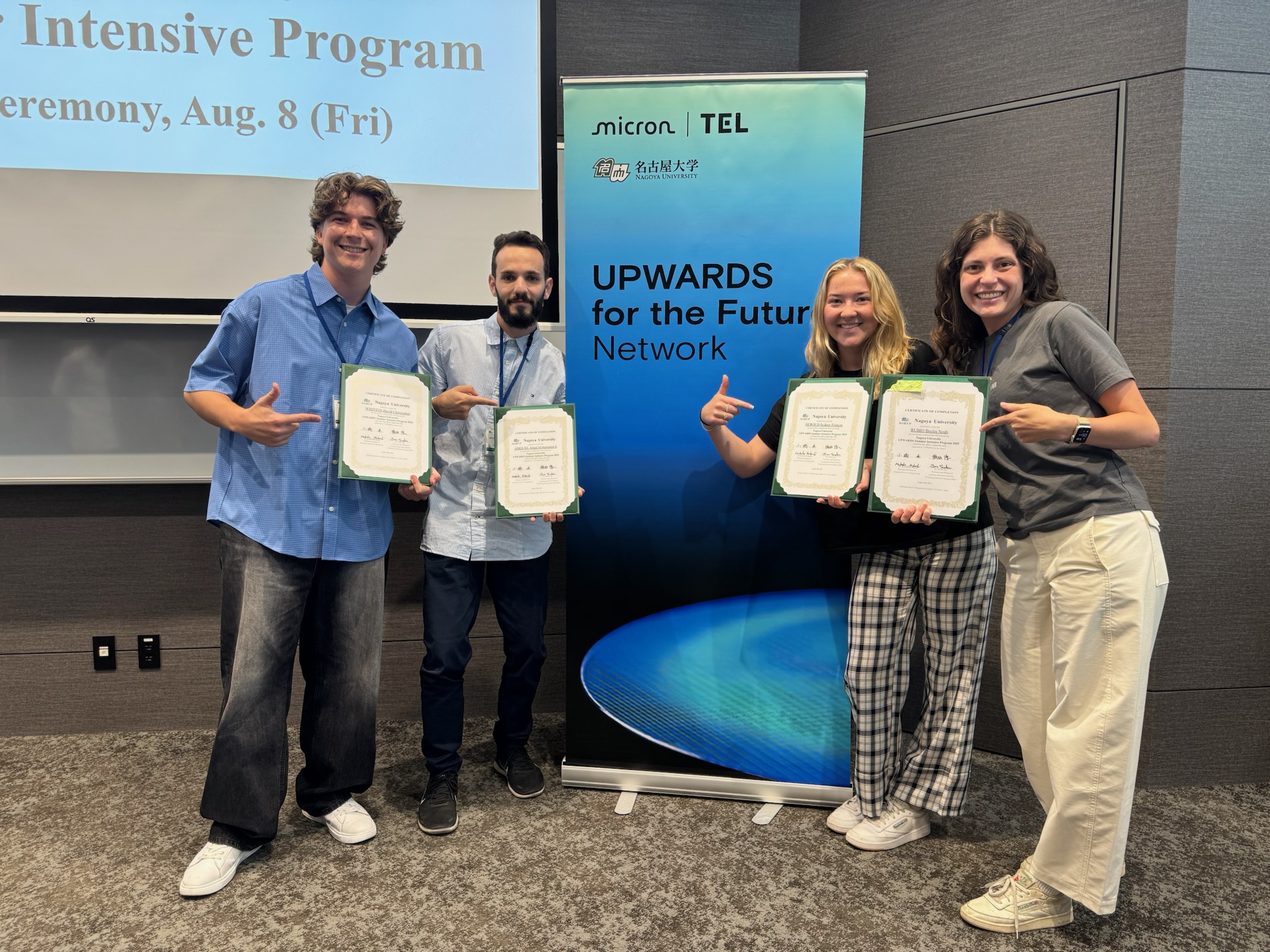
A key part of Boise State’s focus and the mission of the Microelectronics Education and Research Center (MERC) is creating immersive and impactful opportunities for students to learn about semiconductors and microelectronics. The UPWARDS for the Future partnership is a collaboration between 11 US and Japanese universities. Funded by the National Science Foundation, Micron, and Tokyo Electron, UPWARDS offers support for students to gain hands-on experience in semiconductors through programs at participating institutions. These exchanges also allow students to see how this vital industry is studied and advanced on a global scale.
This summer, nine Boise State students participated in UPWARDS summer camps hosted by partner universities, including Virginia Tech and Rochester Institute of Technology (RIT) in the US, as well as Nagoya and Kyushu universities in Japan. These exchanges are central to the program’s mission of expanding semiconductor education and building a strong pipeline for the industry’s future workforce.
The Boise State students who traveled are pursuing majors in the College of Engineering, including Materials Science and Engineering and Electrical and Computer Engineering. Each student worked on projects connected to the semiconductor industry, such as entering and working in cleanrooms, running Gen5 simulations, making solar cells, and conducting experiments like photolithography. Beyond the technical experience, the students emphasized the value of meeting and collaborating with peers from other universities. They highlighted the importance of building both educational and personal connections during the camps.
Travel to Nagoya University
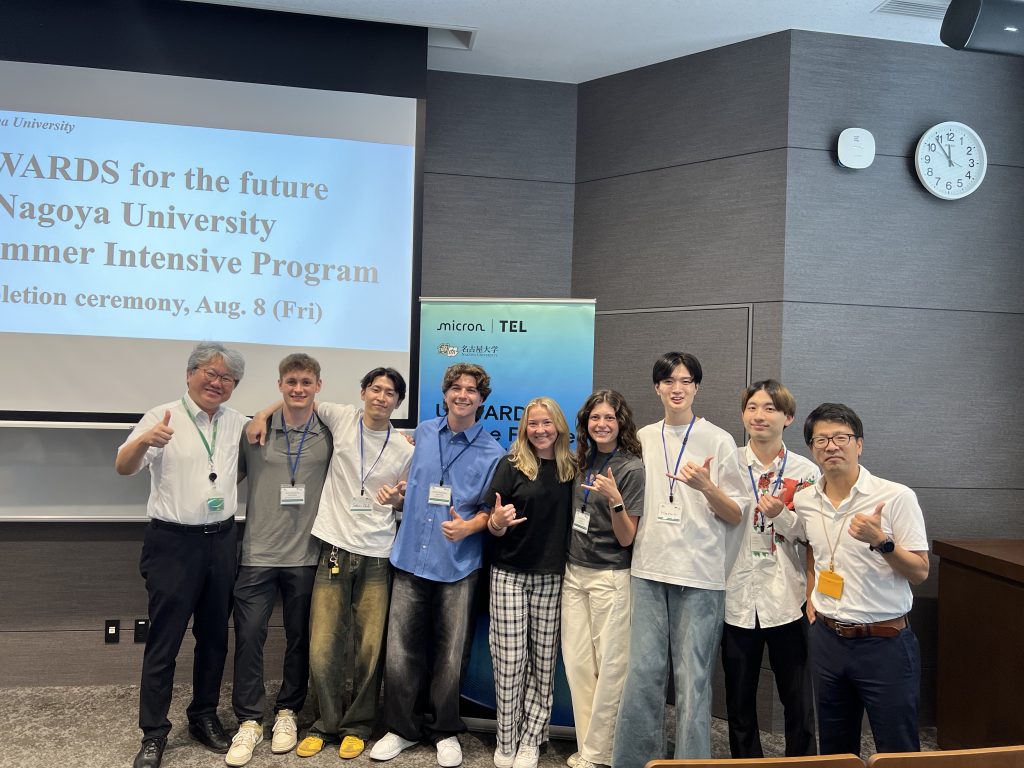
Multiple students had the opportunity to visit Nagoya University, and four seniors pursuing a degree in Materials Science and Engineering shared the value of the international training and collaboration. Joe Amoudi worked on semiconductor processing experiments and gained valuable hands-on experience in the cleanroom. He emphasized the importance of the exchange both for building international connections and for exploring potential career opportunities within the industry.
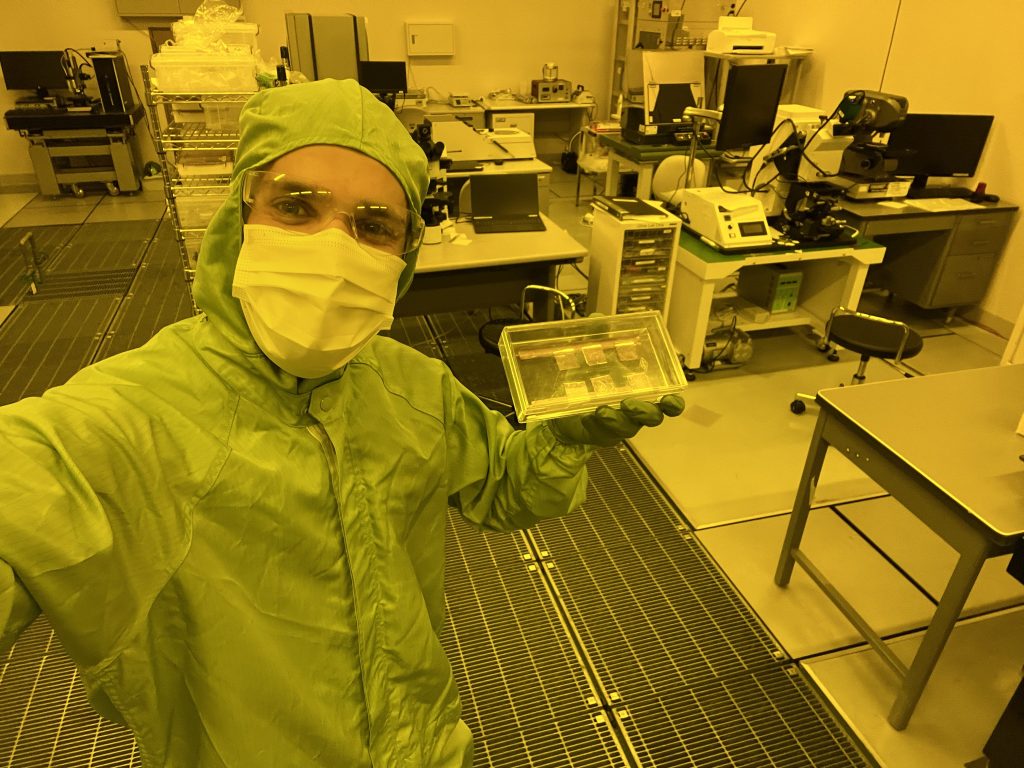
“I not only experienced how research is conducted in another country, but also made connections with Japanese professors, students, and even professionals from Micron Technology. That made the academic side of the trip feel directly linked to real industry opportunities,” he explained. “I learned as much from working with students and professors as I did from the lab tools.”
Amoudi also shared that this experience reinforced his interest in the semiconductor industry, and that the connections and friendships were a central part of the value of such a trip.
Sydney Herold also spent time at Nagoya University. She noted that the research she conducted there was very different from her typical work at Boise State, highlighting her experiences with fabricating a p-type MOSFET chip, characterizing it with SEM, and exploring other processes. She emphasized that opportunities like this, especially in a cross-cultural setting, allow students to immerse themselves in new cultures and learning styles, which can inspire fresh approaches to their education and future career paths.
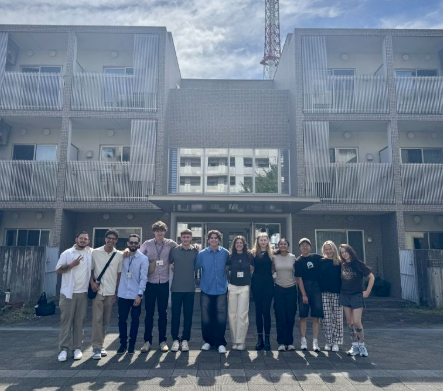
“My greatest takeaway is that research feels like a universal language,” she said. “When you bring together people from different cultures and backgrounds who are passionate about similar research, everyone can contribute to further advancing that research in meaningful ways, regardless of where they come from.”
Herold shared that the trip inspired her to shift her academic focus more toward semiconductors. Collaborating with students and professors from around the world gave her access to experiences she had never had before and left a lasting impact on her plans for life after graduation.
Brylee Rubio traveled alongside Herold and Amoudi to Nagoya. She also shared her experience fabricating a MOSFET chip, as well as learning about plasma science, crystal growth, and wide band gap semiconductors. She stated that thanks to Boise State faculty like Dr. Kurtis Cantley, she has been working on microfabrication techniques throughout her education. But this time at Nagoya gave her an opportunity to experience the processes on different equipment, working in labs and tools on a much larger scale.
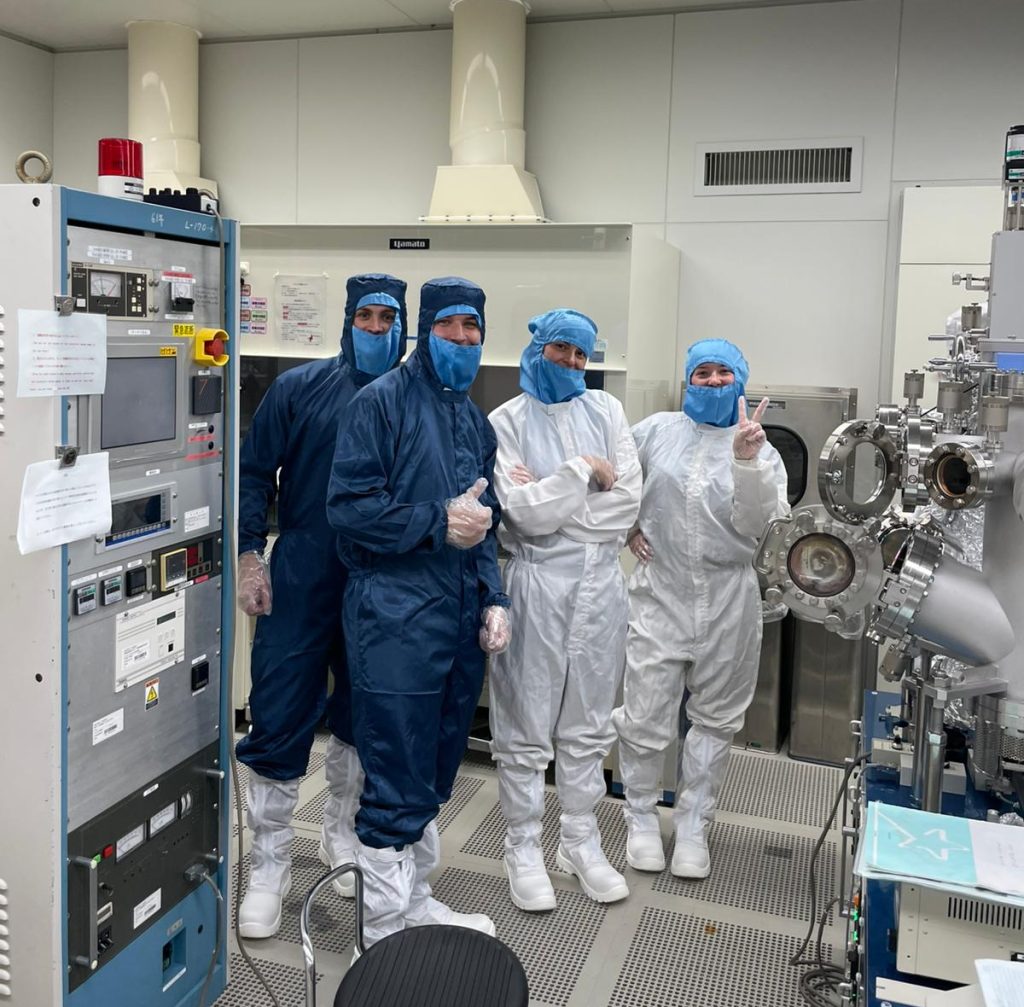
“The greatest take away for me was seeing how global the semiconductor industry really is,” Rubio shared. She explained that an experience like this “broadens your perspective. Every lab has different strengths, and working internationally shows you new techniques, ideas, and ways of thinking you wouldn’t see otherwise.”
Rubio has long been interested in continuing her education and career in semiconductors, but she said this trip helped her clarify the specific path she hopes to pursue and opened her to the possibility of graduate school in materials science.
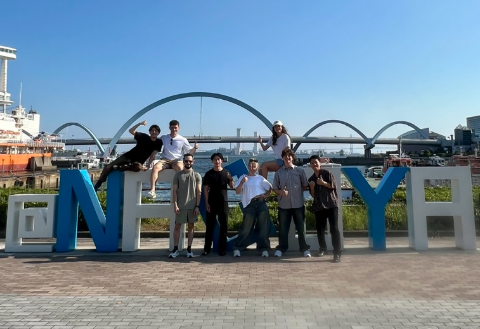
The final student to travel to Nagoya University was David Whitten. He emphasized the value of opportunities like this in broadening his educational experience. The summer camp allowed him to explore the hands-on side of various semiconductor fabrication processes, a contrast to the computational research he conducts at Boise State. Like the other students, Whitten also explained that the interaction and collaboration with other students was pivotal in the experience.
“The greatest benefit of this experience was making connections and friendships with all of the Japanese students and professors. And academically, I left very inspired to continue pursuing research in the semiconductor field, and to continue pursuing a career in the field.”
Travel to Kyushu University
John Hoellen, a senior pursuing a degree in Electrical Engineering, visited Kyushu University. While this was his fourth visit to Japan, he expressed how grateful he was to once again have such a unique opportunity.
“I learned a lot about how a Japanese university operates,” said Hoellen. “I think it is important to visit other universities for experiences like this, especially internationally, because professionally or academically you will meet and work with people from diverse backgrounds.”
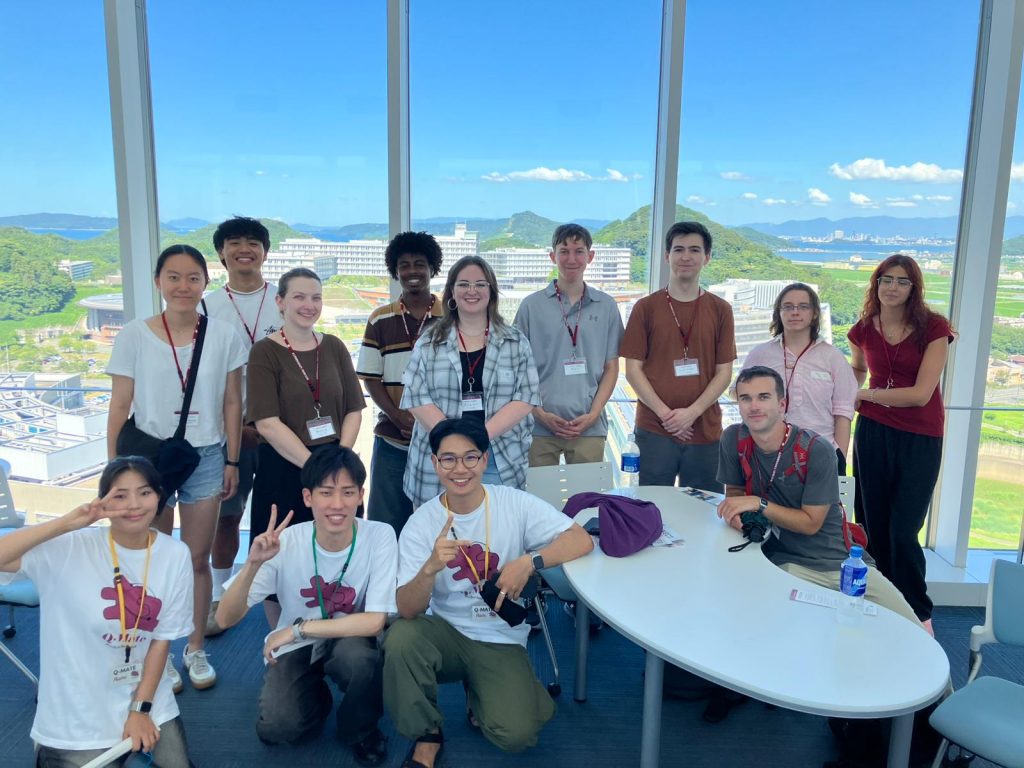
He described his time in a computer architecture lab as an exciting and unique part of his education. He also shared how much he enjoyed connecting with students from Kyushu, learning about their lives as students in Japan and what they study. One of his biggest takeaways was that it strengthened his desire to find a way to live and work in Japan one day, hopefully seeking a career path in semiconductors that will lead him there.
“I was already planning on hopefully making a career in semiconductors, but this summer program reinforced that,” he said.
Travel to Rochester Institute of Technology
Finally, Emaline Lawler, a junior majoring in Electrical Engineering, attended RIT’s summer camp in August. She shared that the experience exceeded her expectations, allowing her to observe work and processes she hadn’t thought possible within just a week. Like others, she emphasized the value of being exposed to work she had never experienced before.
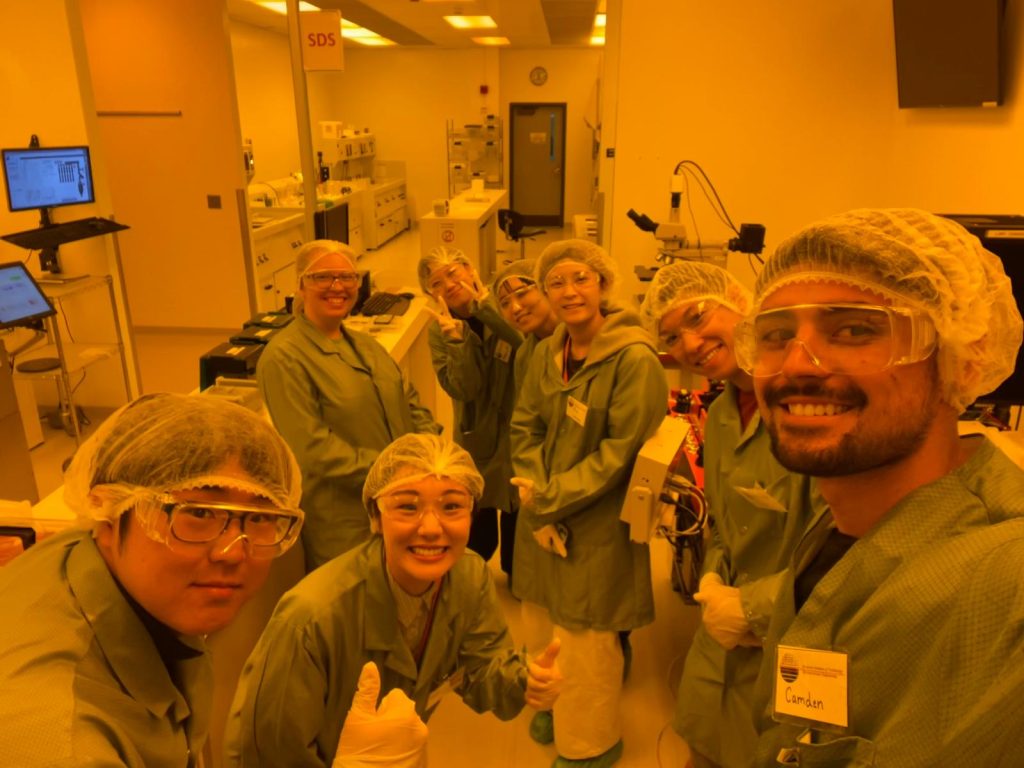
“The program had a good balance of learning about semiconductor processes,” said Lawler. “The greatest benefit from that experience for me was being able to learn more about semiconductor manufacturing and to talk to and learn from other students.”
Overall, the experiences of these students, along with the others who participated, highlight the value of educational exchanges. Traveling and seeing how other universities approach research, experiential learning, and faculty collaboration can open doors students might never have imagined. The work of UPWARDS for the Future, strengthened by Boise State’s participation, helps students gain access and insight into a thriving industry while exploring the wide range of educational and career opportunities it offers.